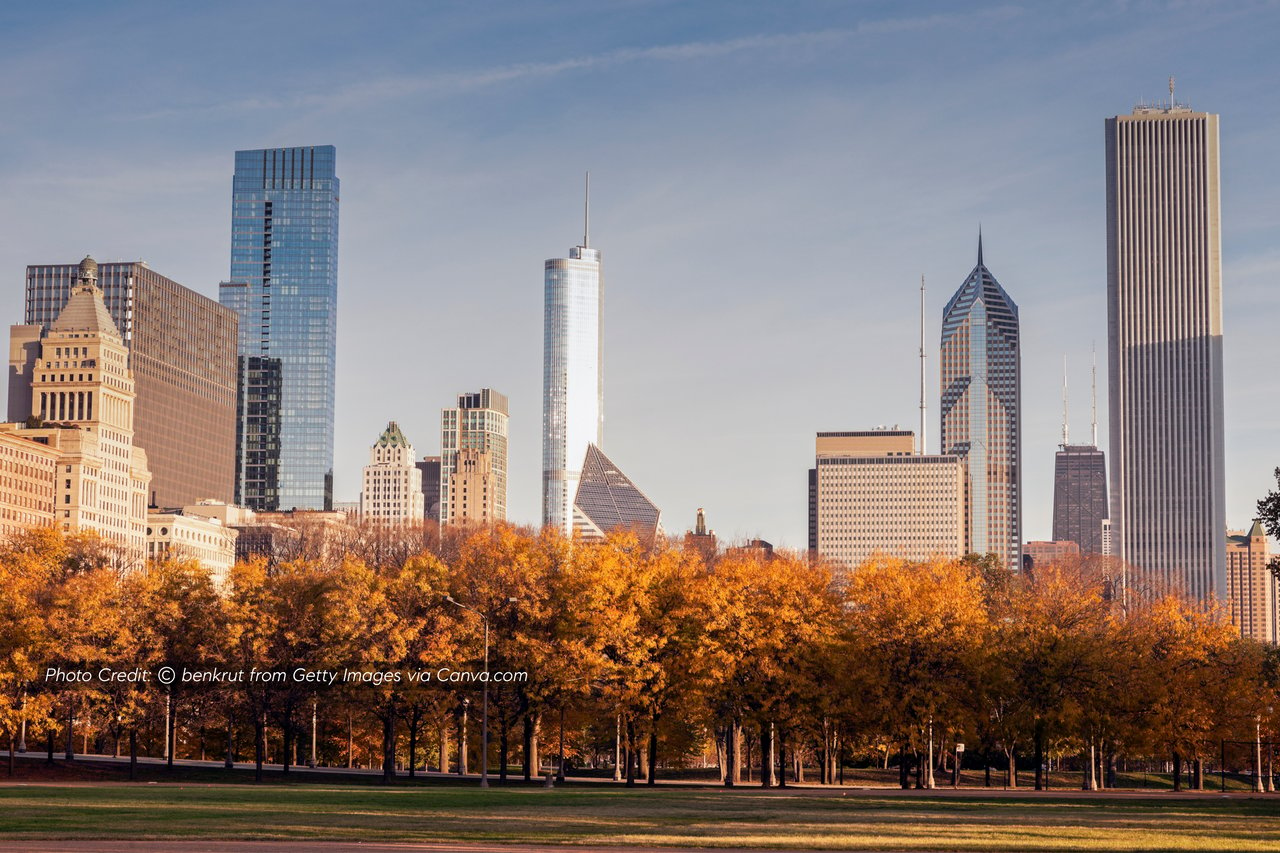
Every October the same question starts landing in my inbox: when do I actually need to get the house ready for winter? My answer hasn't changed in years. Before the first freeze, never after it. The National Weather Service puts the normal first freeze at O'Hare around October 19, and along the lakefront, where Lake Michigan holds the cold off a little longer, it tends to arrive later than in the neighborhoods to the west. Either way the useful window is short. The owners who use it are almost never the ones calling me, or a plumber, at midnight in January.
For a single-family home at the top of the market, the first freeze isn't a comfort question. It's an asset question. The winter failures that cost the most, a pipe that bursts behind a plaster wall, an ice dam feeding meltwater into the eaves, mortar spalling off a limestone façade, are also the ones you can design out almost entirely in advance. None of it is glamorous work. All of it is cheaper in October than in February. Here is the list I give my own clients, matched to the kinds of homes we actually own across Chicago's core.
Key Takeaways
The National Weather Service puts the normal first freeze at O'Hare near October 19, and the lakefront usually freezes later than the western neighborhoods.
The most expensive winter damage is also the most preventable, and the prevention belongs to fall.
Chicago's older single-family stock, the greystones and vintage homes of Lincoln Park, Lakeview, and the Near West Side, needs more attention now than newer construction does.
The American Red Cross advises keeping heat steady and never below 55°F when you travel, which matters for owners who winter elsewhere.
Lakefront homes in East Lakeview, Streeterville, and the Gold Coast carry wind and moisture exposure that inland homes never see.
Start Where the Heat Leaves: Windows and Doors
Weatherstripping, fresh caulk at the window frames, a look at the seals on anything original or single-pane. This is where Chicago's most beautiful single-family homes quietly lose ground. Plenty of the vintage houses and greystones I sell in Lincoln Park and on the Brown Line side of Lakeview still carry their original double-hung openings, and those leak long before the glass ever does. The converted timber-and-brick lofts of the Near West Side have the opposite problem: gorgeous oversized industrial windows that were never built for a February wind. An afternoon of sealing is the least expensive thing on this entire list, and you feel it on every heating bill through March.
Protect the Pipes Before You Need To
This is the one item I don't let a client skip, because a single burst pipe can erase a year of careful upkeep in an afternoon. The American Red Cross keeps it simple: disconnect and drain the garden hoses, insulate exposed pipes in unheated spaces, let a cold faucet drip during a hard freeze, open the cabinet doors so warm air reaches the plumbing, and never drop the thermostat below 55°F if you leave town. That last point isn't a footnote in this market. A good number of luxury owners spend part of the winter somewhere warmer, and a house left cold is a house at risk. Older homes in the Near West Side and Lincoln Park often run their supply lines along exterior masonry walls, which is precisely where a pipe freezes first.
If you own in a Loop high-rise, most of this sits with your association, not with you. Your fall list is short: know where your in-unit shutoff is, and if you travel, hold the same 55°F floor so a quiet unit never becomes the whole building's flood.
Service the Heating System Before the First Cold Snap
A furnace or boiler nobody has looked at since last winter is a bet, and the appointment you want in October is not the emergency you'll pay for in January. Book the inspection now and change the filters. If the house still runs on vintage steam or hot-water heat, common in the grander Gold Coast and Near North homes, bring in someone who actually knows those systems to service and balance it. These setups are wonderful. They are also unforgiving of neglect.
Masonry and Roofline: Where Freeze-Thaw Does the Quiet, Expensive Damage
Here is the part that matters most for Chicago's signature homes. The Historic Chicago Greystone Initiative estimates roughly 30,000 greystones still stand across the city, most built between the 1890s and the 1910s from Indiana limestone, part of the masonry building tradition Chicago embraced after the Great Chicago Fire of 1871 destroyed so much of the city's wood-frame housing. That limestone and the brick beside it are beautiful, and they have one real enemy: freeze-thaw. Water seeps into a hairline gap, freezes, expands, and opens it wider, again and again all winter. Loose or missing mortar is an open door. If your tuckpointing is due, handle it before the freeze, not when the spring thaw hands you the invoice.
While you're looking up, check the roofline and the attic. Ice dams start with heat escaping into the attic, which melts the snow on the roof so it can refreeze at the cold eaves, and clogged gutters only make it worse. Either way the trapped water backs up under the shingles and into the walls of exactly the kind of pitched-roof single-family homes that fill Lincoln Park and Lakeview, so clearing the gutters and checking attic insulation now is the move that heads it off.
Lakefront Homes Play by Different Rules
If your home sits near the water in East Lakeview, Streeterville, or the Gold Coast, the lake rewrites your timeline. Lake Michigan moderates the temperature, which is why the lakefront often freezes later than the western neighborhoods. It trades that grace for harder wind and far more driven moisture coming off the water. Give extra attention to the seals on the lake-facing elevation, to any exposed stone and railings, and to drainage that has to carry water away from the foundation in a wind-driven storm. The later freeze isn't a break. It's a different kind of pressure.
What This Checklist Is Really About
I'll be honest about why I push on this harder than most agents would. A home that has been looked after shows it, and buyers feel that before they can put words to it. The house that came through winter with no water stains, no cracked mortar, and a mechanical system that was serviced on schedule is the house that photographs well in spring and holds its number at the closing table. And if a sale is on your horizon, the same discipline carries into the pre-list decisions that matter most, which improvements Chicago buyers actually reward and which ones they don't, something I broke down in my guide to the upgrades that pay off for sellers in the Loop and Near North. Fall prep isn't a seasonal chore. It's the quiet maintenance that protects the single largest asset most families will ever own. Do it before the first freeze, and winter stops being an event at all.
FAQ
When does the first freeze usually happen in Chicago?
The National Weather Service puts the normal first freeze at O'Hare around October 19. The lakefront tends to freeze later than inland and western areas, so your real window depends on where in the city you live.
What is the single most important fall task for a Chicago homeowner?
Protecting the plumbing. A burst pipe is the most expensive and disruptive winter failure, and it's almost entirely avoidable with insulation, steady heat, and the American Red Cross habits above.
Do older Chicago homes like greystones need more fall prep than new construction?
Yes. Limestone and brick façades take the brunt of freeze-thaw, and older homes often run plumbing along exterior walls. Tuckpointing, sealing, and pipe protection matter more here than in a newer, tightly insulated build.
Should I lower the thermostat if I travel over the winter?
Not below 55°F. The American Red Cross advises leaving the heat on, set no lower than 55°F and held steady day and night, so pipes don't freeze while the house is empty.
Does fall preparation actually affect resale value?
Indirectly, but it's real. A home that clears winter without water damage, masonry cracks, or a system failure presents better and inspects cleaner, which protects both your timeline and your price when you sell.
Ready to Talk Through Your Home This Season?
Whether you're protecting the asset for the long haul or thinking about a sale in the year ahead, I'm glad to walk the house with you and map out what actually matters for your block and your building type. Get in touch, and let's make sure winter is the easy part.

Data sources: National Weather Service, Chicago (weather.gov); the Historic Chicago Greystone Initiative; the American Red Cross (redcross.org). This post is for informational purposes only and does not constitute financial, legal, or investment advice.