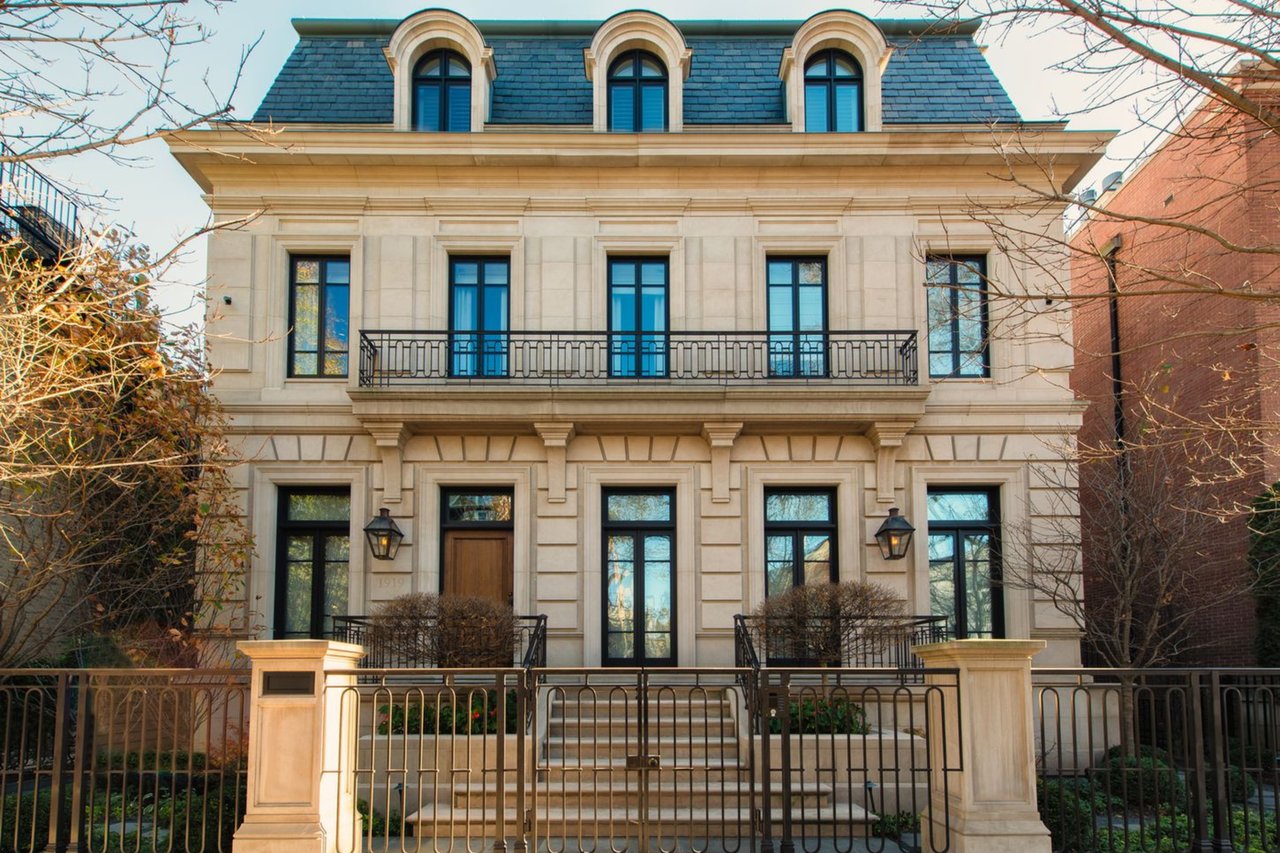
Almost every seller I work with arrives at the same crossroads: do I put money into this house before I list it, or do I sell it as it stands and let the buyer handle the work? It's the right question to ask. It's also where I watch sellers lose the most money by guessing.
The instinct at the top of the market is usually to over-improve, to assume that the more you pour into a home, the more the sale price will follow. On these blocks, that instinct is expensive. The homes that command a premium in Lincoln Park, the Gold Coast, and along the lakefront are rarely the ones with the biggest renovation budget behind them. They're the ones where the right work was done, to the right level, and nothing was wasted past that point.
So the real answer was never "renovate" or "don't." It's "do these specific things, to this specific level, and stop." Here's how I think it through, and the five things that actually earn their keep before a sale in this market.
Key Takeaways
Condition alone moves price per square foot hard in Lincoln Park. I've seen comparable detached sales run from roughly $314/sq ft as-is to about $485 renovated and near $590 for newer construction, on similar blocks.
A targeted kitchen refresh recoups close to its cost, while a full luxury gut ($80K to $150K+) typically returns 40 to 50% on a percentage basis, per Zonda's 2026 Cost vs. Value data.
Move-in-ready condition is the strongest lever in our luxury market right now. Loop and Near North high-rise buyers, and North Side single-family buyers, pay up to avoid inheriting a project.
Permits move faster than sellers remember. Chicago's Department of Buildings Express and Self-Certified programs let licensed contractors clear many kitchen and bath permits in about 5 to 10 business days.
The costliest mistake I see is over-improving past a block's ceiling. In this city, you renovate to the neighborhood's price, not to your receipts.
The Real Question Is "How Far," Not "Whether"
Let me say the uncomfortable part first, because it saves people money: most renovation dollars don't come back one-for-one. Nationally, homeowners recoup around 74 cents on the dollar for larger remodeling projects, per Zonda's 2026 Cost vs. Value data, and Harvard's Joint Center for Housing Studies put U.S. home-improvement spending near a record $524 billion heading into 2026. A lot of that is money chasing a return that isn't there.
Chicago bends that math, though, and in the seller's favor when it's done right. So much of our luxury single-family stock up north is vintage- greystones, brownstones, workers' cottages- that condition itself gets priced sharply into the sale. I've watched the spread play out on comparable Lincoln Park blocks: an as-is vintage row home trading near $314 a foot, a renovated home closer to $485, newer construction pushing $590. On a 3,000-square-foot home, that spread isn't a detail. It's the entire difference between a fine result and a great one.
So the takeaway isn't "always renovate." It's that here, targeted pre-list work is one of the few places a renovation dollar reliably outruns its cost, precisely because our buyers pay a real, measurable premium for finished.
One: Refresh the Kitchen. Do Not Gut It
If you do a single thing before listing, do the kitchen, and resist taking it down to the studs.
The math is lopsided in a way that surprises people. A minor remodel, new fronts and hardware on sound existing boxes, fresh stone counters, a new sink and faucet, good appliances, paint, recoups close to its full cost nationally. A full luxury gut, custom cabinetry, and a moved layout at $80,000 to $150,000 and up, generally hands back 40 to 50 cents on the dollar.
Here's the part I have to say out loud so nobody hears "minor" as "cheap": a $2M Lincoln Park single-family cannot carry a builder-grade kitchen, and these buyers will read it in about four seconds. Targeted, not thrifty. Quartz or natural stone, panel-front appliances that read seamless and make the room feel larger, warm wood tones now that the all-white kitchen has finally cooled off, and a layout you leave alone if it already works. If you're touching electrical or plumbing, pull the permit. The Express program has made that far less painful than it was a few years back, and unpermitted work is exactly what surfaces during attorney review to cost you leverage at the worst moment.
What a dated kitchen really does is invite subtraction. The buyer walks in, stops seeing your home, and starts doing renovation arithmetic, and their number is always bigger than what the work would actually cost. A good kitchen keeps them in the daydream. That is what you're paying for, and it's cheaper than the discount a tired one earns you.
Two: "Move-In Ready" Is the Product
This isn't a project. It's a standard, and at the moment it might be the most valuable thing you can hand a buyer.
Today's luxury buyer often has the income for the home and zero appetite to run a contractor for eight months. That's most acute across the Loop and Near North condo market, where the whole proposition is lifestyle. A turnkey unit with a current kitchen and clean finishes routinely beats the identical floor plan two floors down that needs work. Look at how Gold Coast listings lead: "move right in," "fully renovated"; that language exists because those are the units drawing the attention and the offers. Same logic holds for North Side single-family. The same of this means expensive. It means resolved. Neutral paint, refinished floors, current lighting, systems that work, and nothing that makes a buyer flinch on the walkthrough. The most common way sellers quietly bleed money here is listing a home that's 90% there and letting the last 10% set the tone: the scuffed floors, the one fixture from another decade, the bath nobody touched. Buyers extrapolate from small things, ruthlessly. A few thousand dollars of resolution protects tens of thousands in perception. In a disciplined market like ours, condition reads as credibility.
Three: Every Bathroom to a Clean Mid-Range. Not One Spa
Bathrooms are the second room buyers scrutinize, and they've posted some of their strongest returns in years, roughly 80% for a mid-range remodel per Zonda. Mid-range is the operative word. The upscale spa build with top-tier everything drops back toward 40 to 50%, because the cost climbs faster than buyers will reimburse.
The National Kitchen & Bath Association's 2026 Bath Trends Report has buyers treating the primary bath as a wellness space rather than a utility room, and in a luxury listing it's now one of the most examined rooms in the house. But examined cuts both ways. What wins is current, clean, and consistent across all the baths, not one showpiece with two afterthoughts down the hall. A tired hall bath rarely kills a deal on its own. It just shows up quietly in the offer, and in the buyer's read of how the rest of the house was kept. I'd rather see three genuinely nice mid-range bathrooms than one spectacular one and two that got skipped.
Four: The First Impression Costs Less Than You Think
Here's what surprises sellers most: the highest-return projects in the country are almost all exterior, and comparatively cheap. In the 2026 Cost vs. Value rankings, garage door replacement, a steel entry door, and manufactured stone veneer sit at the very top, several returning more than they cost. Curb appeal punches far above its price.
For detached homes in Lincoln Park, Lakeview, and the residential pockets of the Near West Side, the front of the house is the buyer's first data point, and it colors everything after it. One thing worth knowing if you're in one of Lincoln Park's landmark districts- Mid-North, Old Town Triangle, the Sheffield and Wrightwood Neighbors blocks,-is that landmark status generally governs the exterior and what's visible from the street, while your interior work stays largely unrestricted. So facade and entry choices may need to respect district guidelines, which is worth confirming before you order that new door. For a lakefront or Near North high-rise, the equivalent first impression is the entry sequence and what a buyer registers in the first thirty seconds off the elevator: light, view, finish level.
Sellers love spending on the dramatic interior gesture and walking straight past the front of their own house. But the offer is half-formed before the buyer reaches the kitchen. A clean facade, a crisp door, healthy landscaping, a tidy entry, the cheapest dollars in the whole budget, hardest-working. First impressions aren't soft. They get priced in.
Five: Fix What the Inspector Will Find
The least glamorous item on this list is usually the one that saves the deal. Our older housing stock carries a lot of deferred maintenance, and Lincoln Park and Lakeview are wall-to-wall vintage, so the roof, the mechanicals, the tuckpointing, the windows, the balloon framing, and knob-and-tube surprises that come with a hundred-year-old greystone- all of it is what a buyer can't see and an inspector absolutely will.
These aren't high-ROI in the premium sense. You don't do them to earn more. You do them so you don't give money back. A clean inspection holds your negotiating position and keeps a well-priced listing from unraveling in the ten days after you go under contract. I'll take a sound roof and clean mechanicals over a dramatic finish every single time. In a market where offers come in clean, an inspection surprise is the fastest way to lose the position you worked to build.
Where Luxury Sellers Reliably Lose Money
Knowing what to skip is worth as much as knowing what to fund:
Full gut kitchens and baths right before selling. You won't recoup a $120,000 kitchen. Refresh, don't rebuild.
Additions and primary-suite expansions for resale. Midrange suite additions recoup roughly 27% nationally, less at the upscale end. Build those to live in, not to sell into a listing.
Swimming pools. In our climate,e a lot of buyers read a pool as maintenance, insurance, and liability more than an asset. Before a sale, it's usually a drag on value.
Anything above your block's ceiling. The big one. Chicago prices to the neighborhood, not to your invoices. I've watched sellers renovate to a number the block simply won't support, then wait months for the market to disagree with them. Invest up to the ceiling. Don't try to move it yourself.
So, Renovate or List As-Is?
For most luxury sellers here, it's neither extreme. It's a targeted pre-list plan: refresh the kitchen, bring every bath to a clean mid-range, deliver true move-in-ready condition, sharpen the curb appeal, clear the mechanicals. Skip the gut jobs, the additions, and anything that outruns the block.
The specific plan depends entirely on your home, your neighborhood, and the buyer you're actually selling to. A Gold Coast pre-war co-op, a Lincoln Park greystone in a landmark district, and a Lakeview two-flat each want something different, and getting that right before you spend a dollar is the whole difference between renovation as an investment and renovation as an expensive way to break even. That's the conversation worth having first.
FAQ
Should I renovate my Chicago home before selling, or sell it as-is?
For most luxury single-family and high-end condo sellers, the strongest play is targeted pre-list improvements, not a full renovation and not a straight as-is sale. In condition-sensitive neighborhoods like Lincoln Park, the price-per-square-foot gap between as-is and renovated product is wide enough that the right work returns more than it costs, while a full gut right before listing generally won't. The exact mix depends on your home, block, and price point.
What home renovation has the best return on investment in 2026?
Nationally, exterior curb-appeal projects lead: garage door replacement, steel entry doors, and manufactured stone veneer routinely return more than their cost, per Zonda's 2026 Cost vs. Value Report. Among interior projects, a minor kitchen remodel is the standout, recouping close to its full cost. Full luxury gut kitchens and additions return the least on a percentage basis.
Do luxury kitchen renovations pay off when selling in Chicago?
A strategic refresh does; a full gut usually doesn't. A minor kitchen remodel recoups close to its cost, while a $80,000 to $150,000+ luxury gut typically returns only 40 to 50%. In Lincoln Park and the Gold Coast, aim for a current, move-in-ready kitchen with quality finishes rather than the most expensive build you can manage.
How long do renovation permits take in Chicago?
Faster than most sellers assume. Cosmetic work often needs no permit at all. For anything touching electrical, plumbing, or structure, the Chicago Department of Buildings' Express and Self-Certified programs let licensed contractors pull many kitchen and bath permits in roughly 5 to 10 business days, with larger structural plan reviews running several weeks. Unpermitted past work is a common snag at resale, so confirm your home's permit history before listing.
Does living in a landmark district limit what I can renovate before selling?
Generally, landmark and historic-district rules in Chicago govern the exterior and anything visible from the public way, while interior renovations are largely unrestricted. So a kitchen or bath refresh usually proceeds normally, but facade, window, and entry changes may require review under district guidelines. If your home sits in a designated district, it's worth confirming the specifics before scheduling exterior work.
Which renovations should I avoid before selling a Chicago home?
Avoid full gut kitchens and baths done purely for resale, additions and primary-suite expansions, swimming pools in this climate, and anything that pushes your home above what your block supports. These consistently return well under cost and can leave you over-improved for the neighborhood, which the market won't reward.
Thinking About Selling? Let's Build the Plan Before You Spend a Dollar
If you're weighing whether to renovate before you list, the most valuable move is a strategy conversation before the work starts, not after it's finished. I'll walk your home with you, tell you honestly which improvements your block will actually reward, which ones to skip, and how to position the property so it performs in today's market. Let's take a strategic look at your home together, and map the smartest path to your strongest sale.

Data sources: Zonda / Remodeling Magazine 2026 Cost vs. Value Report; National Kitchen & Bath Association 2026 Bath Trends Report; Harvard Joint Center for Housing Studies (Leading Indicator of Remodeling Activity); City of Chicago Department of Buildings and Commission on Chicago Landmarks (chicago.gov). Neighborhood price observations reflect recent MLS-recorded detached sales in Lincoln Park and are illustrative, not a guarantee of value. This post is for informational purposes only and does not constitute financial, investment, or renovation advice.