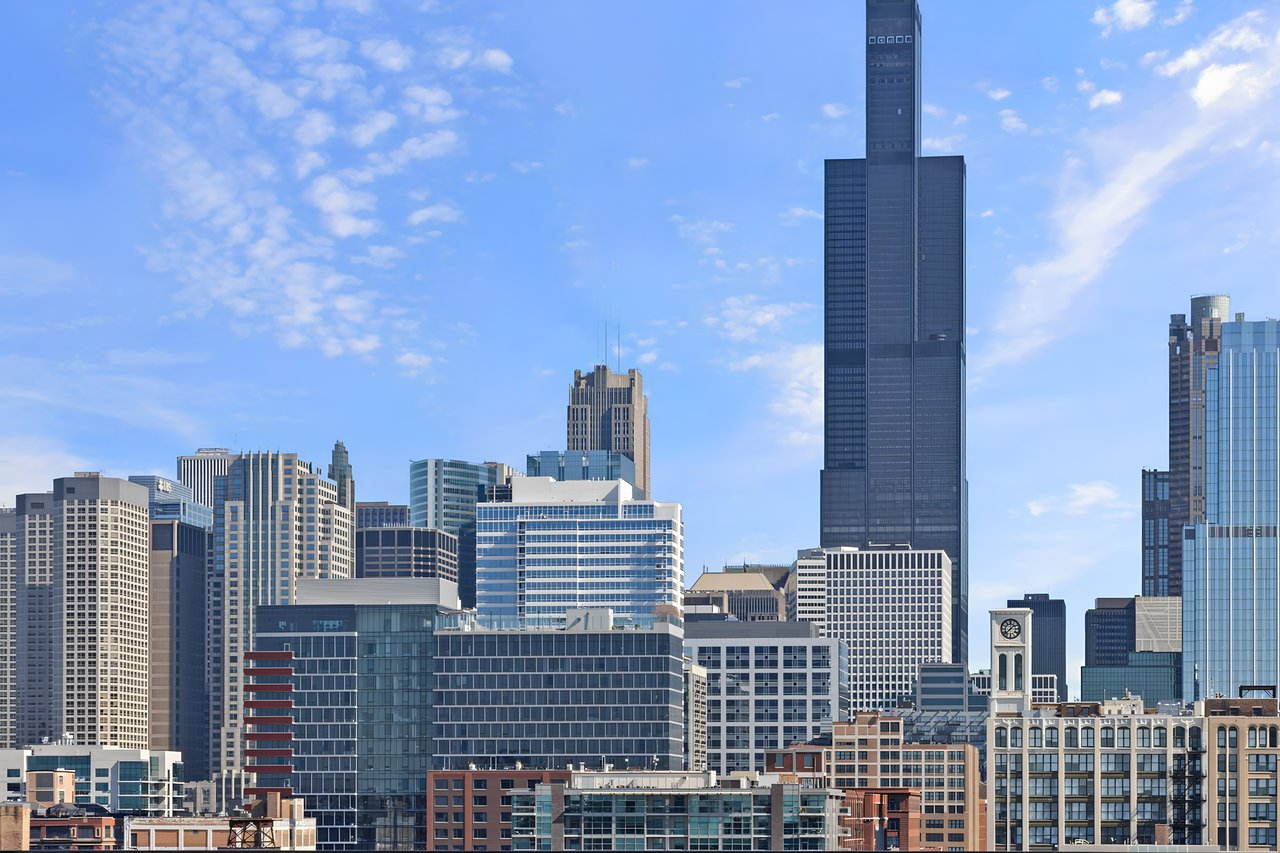
The West Loop Land Grab: How Fulton Market's Growth Is Pushing Buyers Toward the Edges of the Near West Side
Ten years ago, the blocks around Fulton and Morgan were meatpacking docks and cold-storage warehouses. Today the same corridor holds one of the most sought-after addresses in Chicago, anchored by McDonald's global headquarters, Google's Midwest offices, and a Randolph Street restaurant row that pulls people in from across the region. That transformation is essentially finished inside the core of Fulton Market. What is happening now is the part I watch most closely as a broker: the demand that built the core is spilling outward, and it is quietly repricing the surrounding Near West Side one block at a time.
I get a version of the same question almost every week. A buyer loves the energy of Fulton Market, has seen what the pricing has become, and asks whether there is still a way into this part of the city that leaves room to grow. The honest answer is yes, but the opening has moved. Knowing where it moved, and why, is the difference between buying at the top of a finished story and buying into the first pages of the next one.
Key Takeaways
Chicago's citywide median sale price reached $427,500 in June 2026, up 6.9% year over year, while city inventory fell 28.9% to just 3,338 homes, per Illinois REALTORS® data reported by Chicago Agent Magazine.
Fulton Market and River North were the only two downtown submarkets to record positive office absorption through mid-2026, with Fulton Market posting 259,000 square feet, per Cushman & Wakefield's Q2 2026 CBD report.
West Loop direct office vacancy sat at 22.8% in early 2026 against far higher figures in River North (34.4%) and the East Loop (31.8%), per CBRE data reported by REjournals, a gap that anchors residential demand across the Near West Side.
The only new office tower on the horizon, 725 Randolph, is being built inside Fulton Market itself, meaning what little new supply is coming reinforces the district rather than diluting it, per REjournals.
Detached single-family homes are structurally scarce inside the West Loop core, which pushes luxury single-family demand west and south into University Village, Little Italy, and the streets around the Illinois Medical District.
Why Fulton Market Set Off a Chain Reaction
To understand the pressure on the Near West Side, you have to start with the employment picture, because in this part of the city, that is what ultimately drives where people want to live.
Fulton Market did something through the first half of 2026 that almost no other downtown Chicago submarket managed. It kept absorbing office space while most of the CBD gave it back. Fulton Market and River North were the only two downtown submarkets to post positive absorption through mid-2026, and Fulton Market led with 259,000 square feet, according to Cushman & Wakefield's Q2 2026 CBD report. In a downtown where the overall vacancy rate sat above 27%, that is not a rounding difference. It means companies are actively choosing this specific district while pulling back nearly everywhere else.
The contrast between submarkets makes the point sharper. West Loop direct vacancy sat at 22.8% in early 2026, while River North registered 34.4% and the East Loop 31.8%, per CBRE data reported by REjournals. Those are three neighborhoods in the same downtown telling completely different stories. And while 919 W. Fulton was, as of early 2026, the last new office building expected in the CBD, the only new tower on the horizon is 725 Randolph, which Related Midwest plans to build right here in Fulton Market for Sidley Austin, with construction not expected to begin until next year, per REjournals. In other words, what little new supply is coming is landing inside the district itself, not diluting it.
What I tell buyers is that the office story is the residential story, one step removed. When a district becomes the place companies commit to, it becomes the place employees want to live, and that pressure works outward from the center until it finds housing it can reach. Fulton Market is now generating exactly that kind of pressure.
The Single-Family Problem That Sends Buyers Outward
Here is the structural fact that shapes everything else. The West Loop and Fulton Market are overwhelmingly condo and loft markets, built vertically out of old warehouses and newer towers. Detached single-family homes are genuinely rare inside the core, and when one appears, it commands a real premium and usually moves fast.
For a buyer who specifically wants a single-family home, and I work with many who do, that scarcity is not a minor inconvenience. It is a wall. You cannot manufacture detached inventory in a district that never had much of it to begin with. So the buyer who wants the Fulton Market lifestyle but needs a house rather than a unit has to look at the blocks around it, and those blocks have their own distinct character.
That is the mechanism behind the current land grab. It is not that Fulton Market lost its appeal. It is that Fulton Market physically cannot supply the product a growing share of luxury buyers actually want. The surrounding Near West Side, which historically held far more houses than the industrial core ever did, becomes the release valve for that demand.
Where the Houses Actually Are
This is where local knowledge stops being a nice-to-have and starts being the entire deal. The Near West Side is not one market. It is a community area made up of several distinct neighborhoods, and the ones with real single-family stock are specific.
Head south and west of the Fulton Market core and you reach University Village and Little Italy, the part of the Near West Side with the deepest inventory of actual houses. This is where you find historic rowhomes on and around Taylor Street, and the nineteenth-century row houses with Italianate detailing that line streets like Bowler and Oakley, alongside newer townhome developments that went up around the University of Illinois at Chicago campus. It is a genuinely residential pocket with mature parks and a family rhythm that Fulton Market, for all its energy, does not have.
Just west of there sits the Illinois Medical District, one of the largest medical campuses in the country, and the streets around it draw a steady, high-earning buyer pool of physicians and researchers who want to live near where they work. That is a demand base that does not depend on office leasing cycles at all, which is part of why I like the surrounding blocks. Add the transit spine of the Green Line running straight into the Loop, access to sought-after schools like Skinner West and Whitney Young, and the gravitational pull of the United Center to the northwest, and you have a set of neighborhoods with real fundamentals, not just spillover hype.
The buyers who understand this are not chasing the hottest address on Randolph. They are looking one or two neighborhoods over, where a house is actually possible, and the pricing has not fully absorbed what is happening a few blocks east. That is a very different strategy, and in this specific market it is the one I find myself recommending most.
Reading It Block by Block
Even within those neighborhoods, the spread is where the opportunity lives.
The blocks closest to Randolph Street and the Fulton Market core already carry pricing that reflects their proximity. That is the finished part of the story. As you move deeper into University Village, south toward Roosevelt, and west toward the Medical District, the pricing logic shifts. Those blocks still draw on the same Green Line access, the same employment anchors, and the same walkable reach into Restaurant Row, but they have not yet been fully repriced to match the core.
That gap is the entire point. When I evaluate a property here, I am not only looking at the home. I am looking at where it sits relative to the direction the demand is traveling. A house that is one or two removed from the current pricing frontier, but sitting directly in its path, is a fundamentally different buy than one that has already caught up.
How This Connects to the Rest of the City
It helps to put this in citywide context, because the Near West Side dynamic is an intensified version of a pressure squeezing all of Chicago's core neighborhoods.
The citywide median sale price hit $427,500 in June 2026, up 6.9% year over year, while city inventory collapsed 28.9% to just 3,338 homes, according to Illinois REALTORS® data reported by Chicago Agent Magazine. That is a market where supply constraint is the defining feature nearly everywhere. In the Loop, in Lincoln Park, in Near North Side, in Lakeview, the same story plays out in different accents: strong demand, thinning inventory, and buyers competing for a shrinking pool of quality homes.
What makes the Near West Side distinct is that it is one of the few core areas where the demand story is still visibly ahead of the pricing story. In Lincoln Park and Near North Side, the premium is fully established and thoroughly understood. On the western and southern edges of the Near West Side, the employment anchor is documented, the transit is already in the ground, and the residential pricing has not finished catching up. For a buyer who would rather be early than on time, that distinction is the whole game.
What I Would Tell a Buyer Right Now
If you are drawn to this part of Chicago, the strategy depends on what you actually need. If you want a condo or loft in the heart of the action, Fulton Market and the West Loop core deliver that, and they will hold value on the strength of the employment base alone. If you want a single-family home with the same access and more room to appreciate, your search should run into University Village, Little Italy, and the streets near the Medical District, and it should focus on where the pricing frontier is heading, not where it already sits.
The land grab is real. The question is not whether this area keeps drawing demand. The office data settles that. The question is whether you position ahead of the pricing or behind it, and that is a decision that rewards local knowledge more than almost any other in the city right now.
FAQ
Why is the Near West Side attracting buyers priced out of Fulton Market?
Fulton Market is overwhelmingly a condo and loft market with very little detached single-family inventory. Buyers who want a house rather than a unit, and who want to stay within reach of the district's employment and lifestyle, are moving into University Village, Little Italy, and the streets near the Illinois Medical District, where actual houses exist and the pricing on the edges has not fully caught up to the core.
Where can you actually find single-family homes near Fulton Market?
The deepest single-family stock on the Near West Side sits south and west of the Fulton Market core, in University Village and Little Italy. That is where you find historic rowhomes around Taylor Street, the nineteenth-century row houses along streets like Bowler and Oakley, and newer townhome construction near the UIC campus. Detached homes in the West Loop and Fulton Market core themselves are scarce, which is exactly why single-family demand pushes outward.
What makes Fulton Market's growth reliable rather than a passing trend?
The office data. Fulton Market was one of only two downtown submarkets to record positive office absorption through mid-2026, at 259,000 square feet, per Cushman & Wakefield's Q2 2026 CBD report, and its 22.8% West Loop direct vacancy sat well below River North's 34.4% and the East Loop's 31.8% per CBRE via REjournals. The Illinois Medical District adds a second, employment-driven demand base that does not depend on office cycles at all.
How does the Near West Side compare to Lincoln Park or Near North Side for value?
In Lincoln Park and Near North Side, the neighborhood premium is fully established and well understood. On the western and southern edges of the Near West Side, the employment anchors and Green Line transit are in place, but the residential pricing is still forming. For a buyer looking to position ahead of appreciation rather than pay for it after the fact, that gap is the distinction.
Is now a good time to buy in this area given citywide prices?
Chicago's median sale price reached $427,500 in June 2026, up 6.9% year over year, with city inventory down 28.9%, per Illinois REALTORS® via Chicago Agent Magazine. In a supply-constrained market, the neighborhoods where demand is still ahead of pricing are the ones worth focusing on, and the edges of the Near West Side are among the clearest examples in the city.
Ready to Get Ahead of Where the Market Is Moving?
If Fulton Market and the Near West Side are on your radar, the difference between a good buy and a great one here comes down to block-level knowledge: which streets sit in the path of the demand, which neighborhoods still hold real single-family stock, and where the pricing has not yet caught up. That is exactly the kind of map I build with buyers before they ever start touring. Get in touch, and let's look at what is available right now, together.

Data sources: Illinois REALTORS® / Chicago Association of REALTORS® (via Chicago Agent Magazine, July 2026); Cushman & Wakefield Chicago CBD Office Q2 2026 MarketBeat; CBRE Research (via REjournals, 2026). All market data is subject to change. This post is for informational purposes only and does not constitute financial or investment advice.