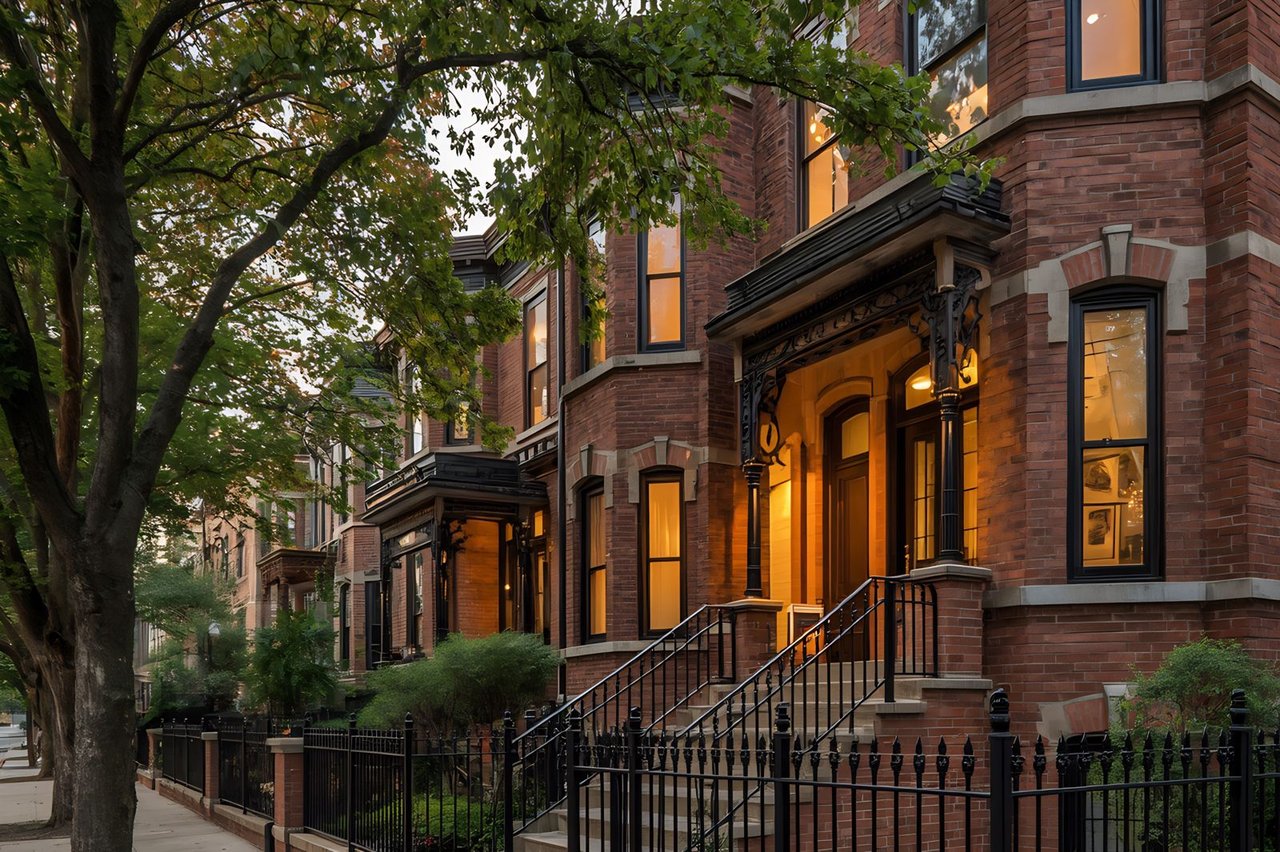
Should You Buy a Single-Family Home in Lakeview in 2026? Here's What the Data Actually Shows
Most buyers who end up purchasing a single-family home in Lakeview didn't set out looking for one.
They set out looking for more space. Or a private yard. Or the ability to renovate without submitting a proposal to an HOA board. Or just — finally — a home office that isn't also the dining room.
What they discovered is that all of those things exist in Chicago, in a neighborhood they already know, at a price point that makes long-term financial sense. That's not a pitch. That's the pattern I've watched repeat itself across enough transactions to call it structural.
Here's what buyers in 2026 need to understand about this market before they start scheduling walkthroughs.
Key Takeaways
-
Lakeview is 60.4% renters — meaning the pool of detached single-family homes that can ever reach the market is permanently, structurally small
-
According to the Illinois Realtors 2026 Annual Forecast, the Chicago metro is projected to see 5% median price growth and a 5.1% increase in closed sales this year — recovery, not frenzy
-
Lakeview detached homes posted 18% year-over-year appreciation through Q3 2025, among the strongest performances on Chicago's North Side
-
Blaine Elementary holds a 5.0/5.0 parent review score and a 12:1 student-teacher ratio on Niche.com — properties within that attendance zone carry a pricing premium that holds across market cycles
-
The Southport Corridor is where the real single-family market lives — not East Lakeview, not Wrigleyville
-
Move-in-ready detached homes in prime blocks currently range from $1.1M to $1.9M; new construction and top school-zone addresses push above $2M
-
2026 is the first year since 2020 where buyers can conduct proper due diligence — inspections are back, and sellers are pricing to comparables
Why Buyers Keep Landing in Lakeview Without Planning To
The transition from condo to single-family home in Chicago follows a predictable path. It starts with a specific friction — usually space — and ends with a buyer realizing the friction was never about one thing. It was about ten things that had been compounding quietly for years.
The second bedroom serves three purposes simultaneously. The renovation requires board approval and a six-month waiting period. The shared roof deck requires scheduling. The parking situation becomes genuinely stressful between November and March. The noise from above only materializes during important calls.
None of these is a dealbreaker on its own. Together, they represent a slow, steady tax on daily quality of life that most condo owners significantly underestimate until it's gone.
According to the National Association of Realtors' 2025 Profile of Home Buyers and Sellers, dedicated workspace now ranks among the top three purchase motivators for urban buyers nationally — a shift that has permanently rewritten what "functional square footage" means for city homeowners. In Chicago's densest neighborhoods, the gap between wanting that space and having it has never been wider.
Lakeview is where buyers close that gap without leaving the city.
The Supply Reality Most Buyers Don't Fully Understand
This is the number I want every Lakeview buyer to internalize before they start their search: 60.4% of Lakeview residents are renters.
That figure, drawn from U.S. Census Bureau data compiled by Homes.com, has a direct and underappreciated consequence for the single-family market. The majority of people living in Lakeview will never list a detached home for sale — because they don't own one. The universe of single-family homes that can ever come to market is, structurally, the minority share of housing in a neighborhood that is already fully built out.
There are no meaningful undeveloped parcels in Lakeview. There is no rezoning pipeline that will produce substantial new single-family inventory. New construction enters the market one teardown at a time — a slow, capital-intensive process that adds a handful of homes per year to a neighborhood of 95,000 people.
This matters because it reframes the question buyers most commonly ask: "Is now the right time?"
In a supply-constrained market with durable demand, timing is rarely the determining variable. The buyers who consistently make strong purchases in Lakeview are not the ones who timed the market. They are the ones who knew what they needed, identified the right block, and executed when a defensible property appeared. Waiting for better conditions usually produces the same options at higher prices — not better ones.
Lakeview Is Four Markets. Treating It as One Will Cost You.
Neighborhood-level data in Lakeview will mislead you. The overall median sale price across all property types sits at approximately $775,000 according to current MLS data compiled by Homes.com — but that figure blends condos, multi-units, and detached homes into a single average that describes none of them accurately.
Here is how the neighborhood actually breaks down for single-family buyers:
East Lakeview — Broadway east to the lake — is predominantly condo and multi-unit. The building stock simply doesn't produce meaningful single-family inventory. When a detached home does appear here, it carries a genuine scarcity premium. This is not typically where buyers making a condo-to-house transition land, nor where I'd direct most of them.
Wrigleyville anchors around Clark Street and Sheffield Avenue near Wrigley Field. Strong neighborhood character, consistent rental demand, and good walkability. The variable most buyers discover after moving in rather than before: event days at Wrigley are not occasional. They are a structural feature of the neighborhood calendar from April through October, with playoff extensions. For buyers who want energy and accept that trade-off, this area works well. For buyers prioritizing quiet residential stability, it often doesn't.
Southport Corridor and West Lakeview are where the real single-family market lives. Streets running off Southport Avenue — Greenview, Racine, Hermitage, Bell, Magnolia — carry the highest concentration of true detached homes in the neighborhood. The ownership profile here is fundamentally different from other Lakeview sub-markets: families tend to stay 8 to 12 years, block character is stable, and the community is defined by residents rather than turnover.
Move-in-ready detached homes in this corridor currently range from approximately $1.1M to $1.9M, with new construction and premium school-zone properties regularly exceeding $2M.
The School Zone Premium: A Pricing Variable, Not a Parenting Decision
This is the conversation I have with every Lakeview buyer, regardless of whether they have children, plan to have children, or have never once considered the matter:
School zone is a pricing variable. It will affect what you pay going in and what you receive going out. Treating it as a lifestyle preference — relevant only if you have school-age kids — is a misunderstanding of how this market works.
Blaine Elementary School is the most consistently referenced zone in Lakeview single-family transactions. According to Niche.com, Blaine holds a 5.0 out of 5.0 parent review score, an A- overall grade, and a 12:1 student-teacher ratio — placing it among the most highly regarded public elementary schools on Chicago's North Side. Hawthorne Scholastic Academy, also within the Lakeview area, carries an A grade on Niche.
Properties marketed as sitting within the Blaine attendance boundary are not using that description as decoration. They are accurately identifying a pricing factor that commands consistent premiums in active transactions — and, critically, attracts a buyer pool that is larger and more financially qualified on resale. That means stronger offer conditions, faster absorption, and better outcomes when you eventually sell.
The premium persists because the underlying demand driver — families specifically targeting that zone — is demographically consistent. It doesn't disappear when the market softens. It moves slightly, then returns.
What 2026 Market Conditions Actually Mean for This Purchase
The 2021–2023 Lakeview market was, in practical terms, a hostile environment for buyers who wanted to make informed decisions. Waived inspections were routine. Escalation clauses were written at kitchen tables. Properties at $1.4M received offers within 48 hours of listing. Buyers who needed time to think didn't get it.
That market is gone.
According to the Illinois Realtors 2026 Annual Forecast, the Chicago metropolitan area is projected to see a 5.1% increase in closed home sales alongside approximately 5% median price growth this year. At the 2026 Chicago Association of Realtors Market Outlook, NAR Chief Economist Dr. Lawrence Yun characterized 2026 as a year of measured recovery — gradual improvement in inventory, easing mortgage rate pressure, and a return to healthier transaction volume following three consecutive years of historically suppressed activity.
What this looks like in practice: inspection contingencies are standard again on most well-structured offers. Sellers are pricing against recent comparables rather than the peak cycle. Pre-approved buyers with clean financials are negotiating from a position of clarity rather than desperation.
Well-priced homes in the Southport Corridor are still moving in two to three weeks. The market has not softened in any meaningful sense. What has changed is that buyers have recovered the ability to make considered decisions — and that is a materially different environment from the one that existed when rates were at historic lows, and competition was unconditional.
The Neighborhood Behind the Numbers
Lakeview's demand durability is not an accident of market timing. It's a function of who lives here.
The average household income in Lakeview is $172,924 and 84.4% of residents hold college degrees, according to demographic data compiled by Homes.com from U.S. Census Bureau sources. The neighborhood sits one mile from Lake Michigan, within walking distance of Lincoln Park, and is served by multiple CTA lines providing direct downtown access.
This is not a neighborhood that experiences structural demand deterioration because of economic headwinds. The buyer pool is deep, employed, and highly educated. That stability doesn't require a strong macro environment to hold — it holds because of who the neighborhood attracts and retains.
Lakeview detached homes posted 18% year-over-year appreciation through Q3 2025 — as reported in our own Q3 2025 Chicago Market Report — among the strongest performances on the North Side. Lincoln Park posted 17% over the same period. Near North Side posted 23%. These numbers reflect consistent demand against constrained supply, not speculative momentum.
Frequently Asked Questions
What is the realistic price range for a single-family home in Lakeview in 2026?
Move-in-ready detached homes in the Southport Corridor and West Lakeview — where the majority of true single-family inventory is concentrated — are currently priced between approximately $1.1M and $1.9M. New construction, fully renovated properties, and homes within the Blaine attendance zone regularly exceed $2M. The neighborhood's overall median of approximately $775,000 reflects all property types, including condos and multi-units, and does not represent the detached SFH segment accurately.
Is paying the school zone premium worth it if I don't have children?
From a resale standpoint, consistently yes. School zone premiums in Lakeview are sustained by demographic demand that does not fluctuate with interest rate cycles. Properties within the Blaine zone attract a larger and more financially qualified buyer pool at resale, which translates to stronger offers, faster absorption, and better outcomes. It is a structural pricing advantage, not a lifestyle amenity.
How competitive is the Lakeview SFH market right now compared to recent years?
Meaningfully less pressured than 2021–2023, but not soft. Well-priced homes in desirable Southport Corridor blocks are typically going under contract within two to three weeks. What has changed is that buyers can now conduct proper due diligence — inspections, financing verification, and comparative analysis — without losing properties to same-day competing offers. That is a fundamentally more favorable buying environment.
Why does Lakeview keep appreciating when other Chicago neighborhoods are flatter?
The combination of structural supply constraint, demographic stability, school quality, and lakefront proximity creates durable demand that persists across market cycles. Lakeview is not appreciating because of speculative momentum — it is appreciating because a limited number of genuinely desirable properties exists within it, and the buyer pool competing for those properties is consistently deep.
What is the single biggest mistake buyers make in Lakeview?
Using ZIP code or neighborhood-level averages to evaluate individual properties. The price difference between a home on a prime Southport Corridor block and a structurally identical home in a less favorable Lakeview sub-market can be substantial — and that difference is not always visible in aggregated data. Block-level knowledge, school zone verification, and transaction history on comparable streets are the variables that determine whether a specific purchase is priced correctly. This is where working with an agent who has direct transaction experience in the neighborhood — not just the city — makes a material difference in outcomes.
The buyers who make the strongest decisions in Lakeview are not the ones who timed the market perfectly. They are the ones who defined their actual requirements with precision, understood the supply reality of the specific sub-market they were targeting, and moved decisively when the right property appeared at a defensible price.
2026 offers something the previous four years did not: enough stability to do that work carefully, without being punished for taking the time to get it right.
If you want to walk through the current Lakeview single-family inventory with someone who knows this market at the transaction level — which blocks, which zones, which properties are priced to move and which aren't — let's connect.

Market data sources: National Association of Realtors 2025 Profile of Home Buyers and Sellers; Illinois Realtors 2026 Annual Forecast; Chicago Association of Realtors 2026 Market Outlook; Compass Q3 2025 Chicago Real Estate Market Report; Niche.com school ratings for Blaine Elementary School and Hawthorne Scholastic Academy; Homes.com Lakeview neighborhood data sourced from U.S. Census Bureau. Pricing observations reflect current active listing and transaction experience in Lakeview and adjacent North Side neighborhoods. Buyers should verify current market conditions at the time of search.