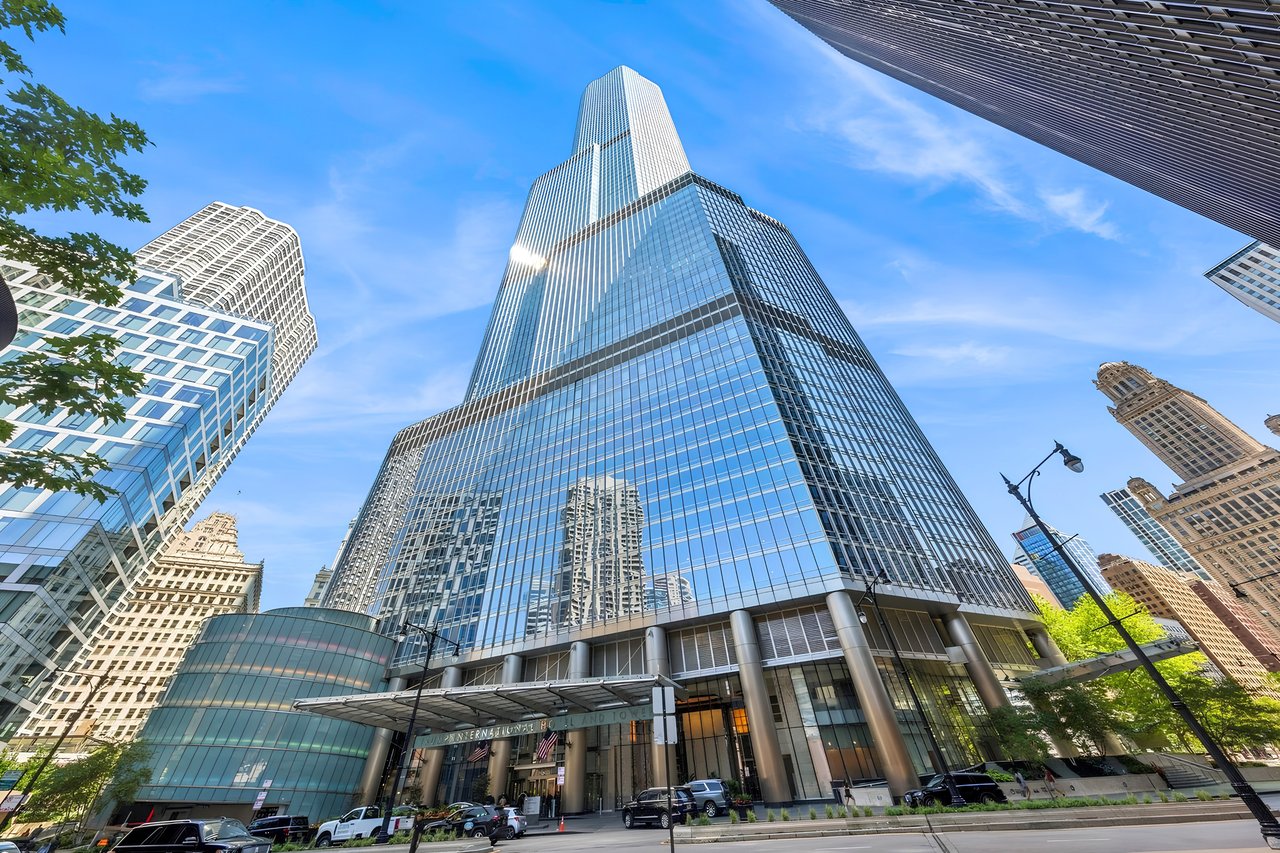
Boutique Building or Full-Service Tower: The Real Cost of Amenities in Near North and Loop Condos
I have spent a large part of my career inside one building. Since 2009, I have sold and leased condominiums at Trump International Hotel and Tower, closed more than 385 transactions there, owned a residence in the building myself, and learned every floor plan in it. That much time inside a single full-service tower teaches you something a pricing sheet never shows. Amenities are not free, and the monthly assessment is only the visible part of what you are actually buying.
When luxury buyers come to me, deciding between a full-service tower and a smaller boutique building, they usually frame it as a lifestyle question. It is really a financial one. The doorman, the valet, the concierge, the pool, the engineering staff, and the reserve fund behind all of it arrive every month on your assessment, and they shape resale value years later in ways that are easy to underestimate on the way in. Here is how I walk buyers through the real math across the Near North Side and the Loop.
Key Takeaways
Full-service towers bundle staffing, security, and amenities into higher monthly assessments by design, while boutique buildings trade those services for lower fees, more privacy, and a smaller owner base.
Chicago led every major U.S. metro in home-price growth in April 2026 at 6.5% year over year, against 0.8% nationally, according to S&P Cotality Case-Shiller data released June 30, 2026.
Rising insurance premiums, labor costs, and aging building systems are pushing condo assessments and special assessments higher across Chicago, according to reporting from Crain's Chicago Business, which makes a building's reserve fund one of the most important numbers in any purchase.
In the Near North Side and the Loop, the real question is rarely which building is better. It is the cost structure and lifestyle that fit how you plan to live and how long you plan to hold.
Reserve health, owner-occupancy, and assessment history shape long-term value more than the amenity list itself.
What "Full-Service" Actually Means, and What You Pay For It
A true full-service tower runs like a small hotel. Buildings such as Trump International Hotel and Tower, the St. Regis Chicago, One Chicago, and the residences at the Waldorf Astoria and the Ritz-Carlton offer around-the-clock door staff, valet parking, concierge service, on-site engineers, fitness centers, pools, and, in the hotel-branded buildings, access to spa and room service.
What you are paying for is not only convenience. It is staffing and predictability. Labor is the single largest line item in a full-service budget, and it is also the fastest rising. One detail I always point out to buyers is the difference between a hotel-branded residence, like Trump or the St. Regis, and a purely residential full-service building. The branded towers layer hotel operations and specific rental rules on top of the condominium, which affects both your monthly cost and how the unit resells. Two buildings can both call themselves full-service and run on very different economics.
The Boutique Alternative: Less Staff, More Privacy, a Different Kind of Risk
A boutique building offers the opposite trade. Think of the limestone conversions and vintage low-rises of the Gold Coast, the classic addresses along Astor Street and East Lake Shore Drive, or a small Near North building with a dozen units. Fewer units mean fewer amenities, often a single door position or none, and noticeably lower assessments. In return, you get privacy, architectural character, and a level of control that a 400-unit tower cannot match. You know your neighbors and your board.
The tradeoff is concentration of risk. When a boutique building needs a new roof, facade repair, or elevator modernization, there are far fewer owners to share the bill. A project that is a rounding error in a large tower can become a meaningful special assessment in a small one. That is why, in a boutique building, the reserve fund is not a detail. It is the whole game.
The Assessment Math: Where the Money Actually Goes
Every assessment covers four things: staffing, insurance, utilities, and reserves. The first three are rising fast. Higher insurance premiums, labor costs, and aging building systems are pushing monthly assessments and one-time special assessments higher across the city, and in my experience, buyers are scrutinizing reserves more closely than ever. The concern is real enough that a new insurance product was recently launched specifically to protect buyers against a surprise special assessment soon after closing, as Crain's reported.
My advice is the same in every building, boutique, or tower. Read the reserve study, the last three years of budgets, and the recent board minutes before you fall in love with the amenity deck. A $900 monthly assessment in a well-run tower that includes utilities and a funded reserve can be a better long-term value than a $500 assessment in a building that is one facade project away from a capital call. The number on the listing sheet is not the cost. The building's financial health is.
Near North Side: The City's Deepest Full-Service Market
No part of Chicago offers more full-service inventory than the Near North Side. River North, Streeterville, and the Gold Coast hold the city's marquee towers, and the same area offers the strongest boutique alternative in its limestone and vintage buildings. It is the one neighborhood where a buyer can genuinely choose either path without leaving the district.
The luxury demand supporting both is well documented. Chicago recorded 156 area home sales at $4 million or more in 2025, the most ever, and up 47% from the year before, according to Crain's Chicago Business, with the Gold Coast, River North, and Streeterville leading city luxury activity. At the same time, the top of the market has grown more disciplined. Crain's reported in July 2026 that a Gold Coast condominium sold for $5.3 million after once being under contract at close to $14 million, a clear sign that buyers are pricing services, condition, and building health carefully rather than paying any number a seller names.
The Loop: Full-Service Living at a Downtown Value
The Loop delivers the full-service lifestyle at a lower price per square foot than the marquee lakefront addresses to the north. The product mix downtown is dominated by condominiums, many of them in amenity-rich towers built for professionals who want services, security, and a walk-to-work location. For a buyer who prioritizes convenience and a lock-and-leave lifestyle over square footage and neighborhood quiet, the Loop often offers the most services per dollar in the city. The same rule applies here as everywhere. A downtown tower is only as strong as its reserves and its management, and those vary widely from building to building, even on the same block.
Resale and Liquidity: The Part Buyers Underestimate
This is where the choice pays off or does not. A well-run full-service tower tends to attract a broad, deep buyer pool, including relocating executives, international buyers, and second-home owners who want services and security. That breadth supports liquidity. The risk is that the same buyers read assessment increases, reserve shortfalls, and litigation closely, and any of those can cool demand quickly.
A boutique building sells on scarcity. There is often nothing else quite like it, which protects value on the way up. But the buyer pool is thinner, and a single large special assessment can weigh on the market's perception. In both cases, the lesson from my own transactions is consistent. The amenity list gets buyers in the door. The building's financial health is what closes the sale and holds the price.
What the Amenity Question Is Really Telling You
The choice between a boutique building and a full-service tower is a proxy for two larger questions: how you want to live, and how long you intend to stay. A frequent traveler who values services, security, and simplicity is usually happier, and often better served financially, in a well-run full-service tower. A buyer who prizes privacy, character, and a lower carrying cost, and who plans to hold for many years, may find more in a boutique building, provided the reserves are strong.
There is a third buyer I see often in this market: the one weighing a full-service condominium against a single-family home in Lincoln Park or Lakeview. That decision is not really tower versus house. It is services versus space. Naming that tradeoff honestly, before touring, is what turns a broad search into a confident one.
FAQ
What is the difference between a full-service and a boutique condo building in Chicago?
A full-service building offers around-the-clock staffing and extensive amenities such as door staff, valet, concierge, engineers, and fitness and pool facilities, funded through higher monthly assessments. A boutique building has fewer units, minimal or no staff, and lower assessments, trading services for privacy, character, and a smaller owner base.
Are higher HOA assessments in full-service buildings worth it?
They can be, depending on what the fee includes and how the building is run. An assessment that covers utilities, strong staffing, and a well-funded reserve can deliver better long-term value than a lower fee in a building with thin reserves. The right comparison is total monthly cost and financial health, not the headline number.
What is a special assessment, and how do I protect myself?
A special assessment is a one-time charge levied on owners to fund a major repair or budget shortfall, such as facade work, elevators, or a mechanical system. According to Crain's Chicago Business, these have become more common as insurance, labor, and repair costs rise. The best protection is to review the reserve study, recent budgets, and board minutes before closing, and to understand your unit's ownership percentage, since that determines your share of any assessment.
Do full-service towers or boutique buildings hold value better in Chicago?
Neither wins automatically. Full-service towers benefit from a broad, liquid buyer pool but are sensitive to assessment increases and reserve issues. Boutique buildings benefit from scarcity but have thinner buyer pools and larger per-unit exposure to big repairs. In both, reserve health and management quality drive long-term value more than amenities alone.
Which Near North Side and Loop buildings are considered full-service?
On the Near North Side, examples include Trump International Hotel and Tower, the St. Regis Chicago, One Chicago, and the residences at the Waldorf Astoria and the Ritz-Carlton. The Loop and adjacent downtown areas hold many amenity-rich residential towers as well. Service levels and financial health vary widely, so each building should be evaluated individually.
How should assessments factor into a luxury condo decision?
Treat the assessment and the building's reserves as seriously as the purchase price. A beautiful unit in an underfunded building is a liability waiting to surface. Ask for the financials early, and weigh the total monthly carrying cost against how long you plan to own.
Ready to Weigh Services Against Value in Your Next Chicago Home?
If you are deciding between a full-service tower and a boutique building on the Near North Side or in the Loop, that choice deserves more than a tour of the amenity floor. The reserve study, the assessment history, and the building's long-term financial health are what separate a smart purchase from an expensive surprise. Get in touch, and let's look at the right buildings and the right numbers together.

Data sources: S&P Cotality Case-Shiller Home Price Index, April 2026 report released June 30, 2026 (spglobal.com); Crain's Chicago Business residential real estate coverage, 2025 to 2026 (chicagobusiness.com). All market data is subject to change. This post is for informational purposes only and does not constitute financial or investment advice.